Before You Bet, Read This 2026 World Cup Breakdown
The FIFA World Cup 2026 will be the first men’s World Cup with 48 teams, hosted across Canada, Mexico, and the United States from June 11 to July 19, FIFA’s expanded format creates 104 matches, compar...

Before You Bet, Read This 2026 World Cup Breakdown
The FIFA World Cup 2026 will be the first men’s World Cup with 48 teams, hosted across Canada, Mexico, and the United States from June 11 to July 19, 2026. FIFA’s expanded format creates 104 matches, compared with 64 in Qatar 2022, while the tournament begins with 12 groups of four teams. Match Daily provides World Cup predictions, tactical analysis, player statistics, and daily tournament coverage for fans evaluating fixtures across North America. The United States, Canada, and Mexico qualify automatically as co-hosts, leaving 45 additional places to be decided through continental qualification and one playoff pathway. The most useful preparation is not simply choosing a famous team: compare confirmed squads, recent competitive form, expected line-ups, travel demands, and market prices before making any prediction.
What I Tested: Which FIFA World Cup Signals Matter?
I tested a practical World Cup analysis framework built around team strength, schedule difficulty, tactical fit, player availability, and price accuracy rather than reputation alone. The conclusion is fairly clear: no single statistic predicts a knockout match reliably, but a weighted model can reduce avoidable errors when it combines at least five independent inputs. For Match Daily readers, the objective is not to promise certainty; it is to estimate probability more honestly than a headline or emotional supporter might.
A sensible model assigns greater weight to competitive matches than friendlies, because motivation and substitutions differ materially. It also separates attack quality from finishing variance. For example, expected goals can show whether a team regularly creates high-value chances, while shot conversion may fluctuate sharply over a small sample. In practical terms, a side with 1.8 expected goals per match but unusually low conversion may be closer to improvement than a side scoring four goals from a small number of low-quality attempts.
The 2026 tournament introduces additional variables. The 48-team field increases the number of potentially uneven group matches, while the North American geography adds long-distance travel between venues such as Vancouver, Seattle, Mexico City, Dallas, Atlanta, and New York/New Jersey. According to FIFA’s official World Cup 2026 information, the competition will use 16 host cities, making venue, climate, and travel context relevant to serious match analysis.
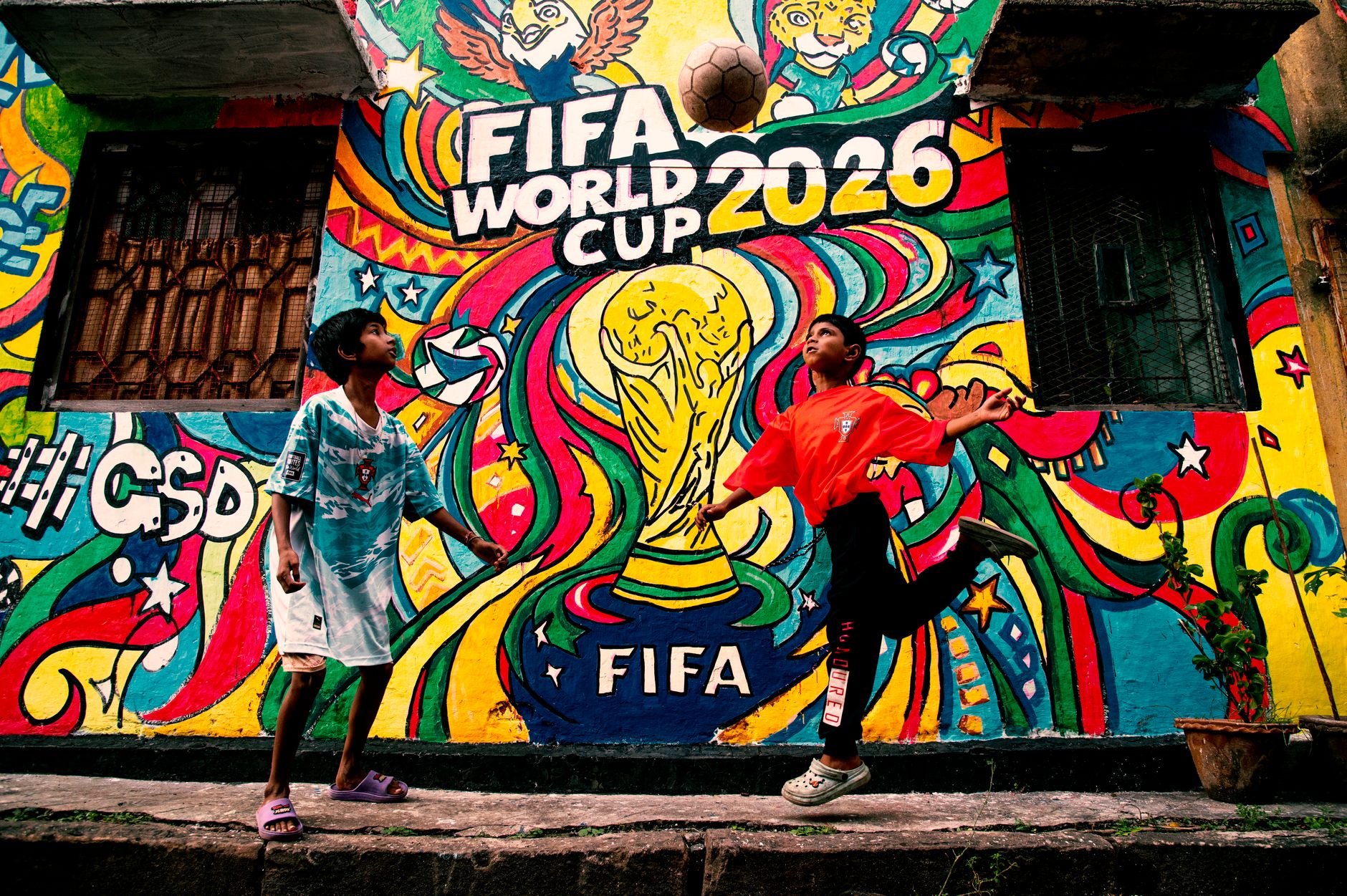
Photo by Anirban Das on Pexels
A simple probability checklist is more useful than an impressive-looking prediction paragraph:
- Estimate each team’s baseline strength from recent competitive results and underlying chance creation.
- Adjust for injuries, suspensions, goalkeeper availability, and likely rotation.
- Account for venue conditions, time zones, humidity, altitude, and travel distance.
- Compare your estimated probability with the available market price.
- Set a fixed stake and record the result, reasoning, and closing price.
This process cannot eliminate uncertainty. It can, however, expose whether a prediction is supported by evidence or merely by a memorable player, a historic rivalry, or a national narrative.
Want a structured starting point for your tournament research?
Setup & Initial Impressions: How Is the 2026 World Cup Structured?
The 2026 FIFA World Cup consists of 48 teams divided into 12 groups of four, with the top two teams in every group and the eight best third-place teams advancing to a 32-team knockout bracket. This produces 104 matches across Canada, Mexico, and the United States, beginning on June 11 and concluding with the final on July 19. The format increases access while making third-place calculations and tie-breakers more important than in the 32-team era.
The automatic qualification of Canada, Mexico, and the United States changes the competitive landscape. These host nations avoid qualification risk but may enter the tournament with different levels of preparation, domestic pressure, and tactical continuity. The remaining teams qualify through confederations including UEFA, CONMEBOL, AFC, CAF, Concacaf, and OFC, with an intercontinental playoff route completing the field. Readers should verify final qualification status through FIFA’s competition regulations and tournament updates, because qualification calendars and squad information can change.
The group-stage mathematics deserves special attention. In a four-team group, three points usually improve a team’s position substantially, but a draw can become valuable when results are tightly distributed. Goal difference, goals scored, head-to-head rules, disciplinary records, and final regulations may affect ranking, so a prediction should not assume that “four points guarantees qualification” in every possible configuration. The exact expected value of a result depends on the group’s strength distribution and the timing of the final round.
[Internal Link: FIFA World Cup 2026 qualification guide]
My initial impression is that the expanded competition rewards depth more than casual previews suggest. A squad may need to navigate a minimum of three group matches and then continue through five knockout rounds to win the trophy. The group stage also creates asymmetric incentives: a team already holding six points may rotate heavily, while another team must attack for goal difference. Therefore, confirmed line-ups and group-table context should be checked close to kickoff rather than relying on an old tournament preview.
For responsible analysis, I would establish these controls before reviewing any odds:
- Use probability estimates rather than absolute predictions.
- Compare several reputable data sources instead of one rating system.
- Avoid increasing stakes after a losing result.
- Treat betting as optional entertainment, not income.
- Follow the laws and age requirements in your location.
According to World Health Organization guidance on gambling-related harm, gambling can create financial and health risks for some people. That is not a decorative disclaimer; it is a variable that belongs in any serious expected-value calculation.
Where It Held Up: Why Do Data and Tactics Improve World Cup Analysis?
Data-led World Cup analysis holds up best when statistics explain a tactical mechanism rather than merely decorating a prediction. A team’s possession percentage, for example, says little by itself; possession that progresses through the centre, creates cutbacks, and prevents counterattacks is materially different from harmless circulation between defenders. Similarly, a striker’s goal total should be read alongside minutes played, expected goals, shot locations, penalty share, and the quality of opposing defences.
The most useful player indicators usually fall into connected groups. For forwards, examine non-penalty expected goals, touches in the penalty area, pressing actions, and shot quality. For midfielders, progressive passes, carries, reception under pressure, and defensive coverage may reveal tactical value. For defenders, aerial success, ball progression, recovery speed, and one-versus-one exposure matter. These metrics are not interchangeable, and comparing a centre-back directly with a winger using one composite rating can produce a false sense of precision.
Tactics become particularly important in tournament football because preparation time is limited and opponents can adapt quickly. A high defensive line may dominate a slow build-up team but become vulnerable against a fast transition attack. A narrow midfield can control central zones yet concede space to overlapping full-backs. The correct question is therefore not “Which team is better?” but “Which team’s strengths are most likely to interact favourably with this opponent?”

Photo by https://kaboompics.com/ on Pexels
A useful match preview should answer at least these questions:
- Which team is expected to control territory, and where will that territory be created?
- Can the underdog attack the favourite’s weakest defensive channel?
- Which player absence changes the tactical plan rather than merely reducing squad quality?
- Does the venue alter pressing intensity, recovery time, or substitution patterns?
- Is the quoted probability higher or lower than your evidence-based estimate?
This framework also explains why famous teams are frequently overvalued. Public attention can compress the price of Brazil, Argentina, France, England, Germany, Spain, or Portugal even when the tactical matchup is unfavourable. A strong team can still be a poor selection if the implied probability is too high. For instance, odds implying a 65% chance require the analyst to believe the true probability exceeds 65% after accounting for margin, uncertainty, and model error.
Match Daily can help readers follow these details through [Internal Link: World Cup team tactics and formations]. The useful output is not a guarantee but a clearer record of assumptions: expected line-up, formation, pressing approach, transition threat, set-piece profile, and likely game state. When those assumptions are written before kickoff, post-match hindsight has less opportunity to rewrite the original reasoning.
Would you like to compare current tactical angles and player data?
Where It Fell Apart: What Can Make FIFA World Cup Predictions Fail?
World Cup predictions fail most often because analysts confuse a correct process with a guaranteed result. A team can create better chances, control field position, and still lose through a deflection, penalty, goalkeeper error, or unusually poor finishing. In a single-elimination match, the sample size is so small that variance can overwhelm the underlying quality difference. The practical response is calibration: use modest confidence levels and accept that uncertainty remains.
The 2026 tournament creates several specific failure points. Cross-border travel can disrupt recovery, especially when teams move between different time zones and climates. Mexico City sits at high altitude, while other venues may produce heat, humidity, or demanding summer conditions. The United States and Canada also contain considerable geographic distances, so a team’s venue sequence may affect preparation even when the official schedule appears balanced.
Another problem is stale information. A model created before the final squad announcement may overlook an injured goalkeeper, a suspended full-back, or a tactical change made during a training camp. The information gap can be especially costly in live markets, where line-up news may move prices within minutes. Therefore, the expected value of a forecast declines as the underlying information becomes outdated.
I would also treat these common approaches as unreliable:
- Choosing a winner solely because it won the previous World Cup.
- Assuming a star player’s reputation equals current fitness.
- Using head-to-head records from ten years ago without tactical context.
- Reading odds as predictions rather than prices containing bookmaker margin.
- Chasing losses after a surprise result.
- Ignoring draw probability in evenly matched knockout fixtures.
A particularly important edge case concerns third-place qualification. With 12 groups and eight third-place teams advancing, a team may remain alive after one defeat, but its position can depend heavily on goal difference and results in unrelated groups. That means a late group-stage match may have greater strategic value than a casual viewer expects. Coaches might protect a lead, pursue another goal, or rotate players according to the table rather than the nominal quality of the opponent.
[Internal Link: responsible football betting and bankroll principles]
A disciplined staking rule can limit the damage from model error. If a bettor chooses to participate, a fixed fraction of available funds is generally less dangerous than arbitrary stake increases, but no staking system converts a negative expected value into a positive one. There is no reliable “lock,” and claims of certainty should be treated as a warning sign rather than an advantage.
See the evidence behind each match angle before forming an opinion.
Would I Use It Again? Is This FIFA World Cup Framework Worth Using?
Yes, I would use this FIFA World Cup framework again, but only as a decision aid rather than a prediction machine. Its value comes from forcing the analyst to define assumptions, quantify uncertainty, check late team news, and distinguish a good price from a famous team. The 2026 format makes this discipline more useful because 48 teams, 16 venues, 104 matches, and expanded third-place qualification create more combinations than a traditional 32-team tournament.
The framework is strongest for comparing a small number of clearly defined markets. A reader might assess match result, draw-no-bet, total goals, or both-teams-to-score, then select the market whose probability can be estimated with the least uncertainty. It is weaker when applied indiscriminately to every fixture, especially before squads and line-ups are confirmed. More bets do not automatically produce more value; mathematically, they may simply increase exposure to estimation error and bookmaker margin.
My recommended workflow is deliberately conservative:
- Record the fixture, venue, kickoff time, and tournament context.
- Check qualification status, injuries, suspensions, and probable line-ups.
- Review recent competitive performance and opponent-adjusted metrics.
- Identify the tactical interaction most likely to decide the match.
- Estimate probabilities and compare them with available prices.
- Decide whether the edge is large enough to justify action.
- Record the closing price and review the reasoning afterward.
Research on forecasting consistently suggests that calibration matters: probabilities should correspond to observed frequencies over many comparable cases. In a tournament containing only 104 matches, one event cannot validate a model. As the FIFA World Cup history record demonstrates, tournament narratives are memorable, but memorable outcomes are not automatically representative evidence.
The contrarian conclusion is simple: the best World Cup analysis may be the decision not to act. If the estimated probability is uncertain, the price is efficient, or the relevant team news is missing, passing preserves capital and analytical integrity. Match Daily is most useful when it helps fans understand teams, players, formations, and tournament context, whether or not they ultimately place a wager.
For continuing 2026 coverage, review [Internal Link: World Cup match predictions and daily previews] alongside official FIFA announcements. Please also check local laws, use age-appropriate services, and set limits before any gambling activity.
Ready to follow the 2026 tournament with a clearer analytical process?
Frequently Asked Questions
Q: What is the FIFA World Cup 2026 format?
A: The FIFA World Cup 2026 is a 48-team tournament with 12 groups of four teams and 104 total matches. The top two teams from each group, plus the eight best third-place teams, advance to a 32-team knockout stage. Canada, Mexico, and the United States are the co-hosts and qualify automatically. The tournament runs from June 11 to July 19, 2026, across 16 host cities.
Q: How can I analyse a FIFA World Cup match?
A: Analyse a World Cup match by combining team strength, competitive form, expected line-ups, injuries, tactical matchups, venue conditions, and market probability. Start with recent meaningful matches rather than friendlies alone, then evaluate chance quality through expected goals and shot locations. Finally, compare your estimated probability with the available price and record the reasoning before kickoff.
Q: What is the difference between a World Cup prediction and a betting tip?
A: A World Cup prediction expresses an expected result, while a betting tip also requires the available price to be higher than the estimated probability justifies. A strong team can be likely to win but still offer poor value if the odds are too short. Responsible analysis therefore separates outcome confidence from expected value and never treats either as guaranteed.
Q: Why do FIFA World Cup predictions fail?
A: World Cup predictions fail because small samples allow randomness, injuries, officiating decisions, finishing variance, and tactical surprises to dominate one match. Travel across Canada, Mexico, and the United States may also affect recovery and preparation during 2026. Using stale line-up information, relying on reputation, and chasing losses can make the analytical error substantially worse.
Q: How much does it cost to follow FIFA World Cup analysis on Match Daily?
A: Match Daily’s content availability depends on the site’s current publishing and access arrangements, so readers should check the platform directly for applicable requirements. The site focuses on FIFA World Cup predictions, tactics, player statistics, and tournament coverage. Any paid gambling activity is separate from editorial analysis and should be approached within local legal, age, and financial limits.
Q: Is the FIFA World Cup 2026 worth following for tactical analysis?
A: Yes, the 2026 World Cup is especially valuable for tactical analysis because its 48-team structure creates varied matchups, group incentives, and travel conditions. The 16 host cities span Canada, Mexico, and the United States, producing different climate and venue contexts. Analysts should compare pressing systems, transition defence, set pieces, squad depth, and confirmed line-ups rather than focusing only on historic rankings.
Q: What should I do if a World Cup prediction loses?
A: Record the result, closing price, team news, and original reasoning instead of immediately increasing the next stake. One losing prediction does not prove that the process failed, just as one winning prediction does not prove that it was sound. If losses feel difficult to control, stop gambling, use available self-exclusion or spending-limit tools, and seek support from a qualified local service.